Impact of Drug Load on Release Kinetics of a Meloxicam PCL Matrix

Control of drug release kinetics from hot-melt extruded drug-loaded polycaprolactone matrices
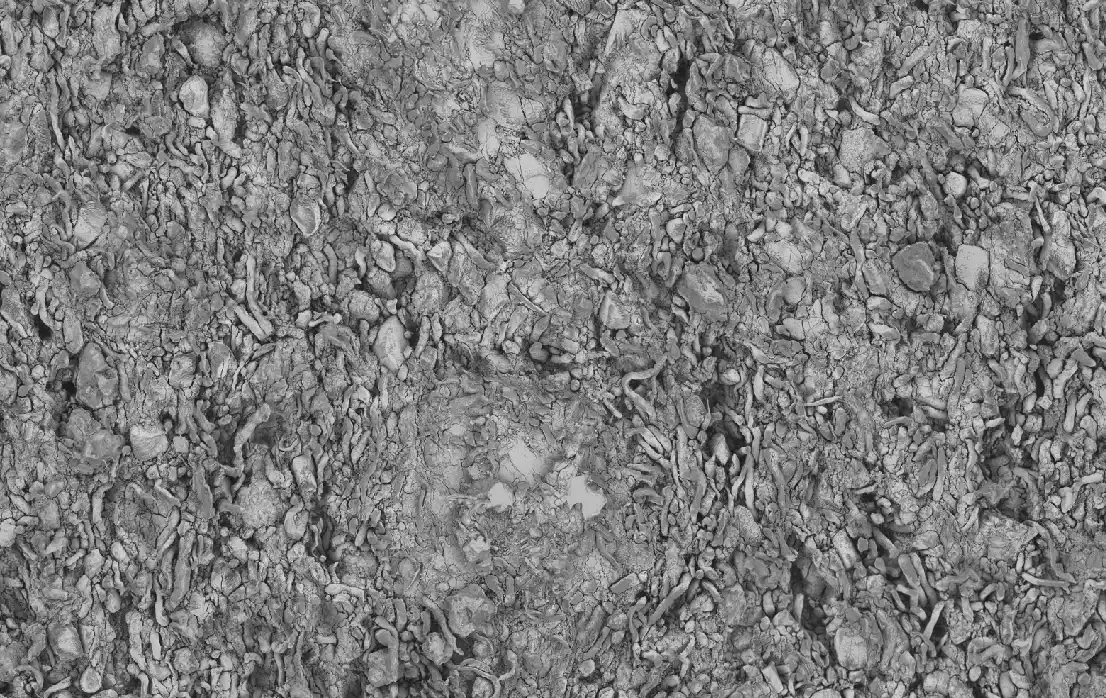
Sustained local delivery of meloxicam by polymeric structures is desirable for preventing subacute inflammation and biofilm formation following tissue incision or injury. Our previous study demonstrated that meloxicam release from hot-melt extruded (HME) poly(ε-caprolactone) (PCL) matrices could be controlled by adjusting the drug content. Increasing drug content accelerated the drug release as the initial drug release generated a pore network to facilitate subsequent drug dissolution and diffusion. In this study, high-resolution micro-computed tomography (HR μCT) and artificial intelligence (AI) image analysis were used to visualize the microstructure of matrices and simulate the drug release process. The image analysis indicated that meloxicam release from the PCL matrix was primarily driven by diffusion but limited by the amount of infiltrating fluid when drug content was low (i.e., the connectivity of the drug/pore network was poor). Since the drug content is not easy to change when a product has a fixed dose and dimension/geometry, we sought an alternative approach to control the meloxicam release from the PCL matrices. Here, magnesium hydroxide (Mg(OH)2) was employed as a solid porogen in the drug-PCL matrix so that Mg(OH)2 dissolved with time in the aqueous environment creating additional pore networks to facilitate local dissolution and diffusion of meloxicam. PCL matrices were produced with a fixed 30 wt% meloxicam loading and variable Mg(OH)2 loadings from 20 wt% to 50 wt%. The meloxicam release increased in proportion to the Mg(OH)2 content, resulting in almost complete drug release in 14 d from the matrix with 50 wt% Mg(OH)2. The porogen addition is a simple strategy to tune drug release kinetics, applicable to other drug-eluting matrices with similar constraints.

Yun-Chu Chen, Sota Shishikura, Dana E. Moseson, Austin J. Ignatovich, Joshua Lomeo, Aiden Zhu, Sarena D. Horava, Coralie A. Richard, Kinam Park, Yoon Yeo
Published with Eli Lilly and Purdue
https://doi.org/10.1016/j.jconrel.2023.05.049


Additional Publications
Transform Your Program with Microstructure Science
Get started with a drug product digital twin.