
Simulate Drug Release
From Real Microstructure.
ivisLab predicts in vitro and in vivo release profiles for complex dosage forms using first-principles physics and real microstructure data. No curve fitting. No months of waiting.
Release testing for complex dosage forms needs a new approach
Long-acting injectables, implants, and depot formulations require months of release testing. Accelerated methods often fail to predict real-world performance, leaving teams guessing until clinical stages.
LAI and implant release testing can take 30 to 90+ days per condition. Each reformulation restarts the clock, draining time and material budgets.
Shortcuts like elevated temperature or pH often fail to predict real-world release behavior. Teams discover this too late in development.
Traditional models treat dosage forms as homogeneous. They ignore the actual pore networks, polymer matrices, and phase structures driving release kinetics.
First-Principles Drug Release Simulation
ivisLab integrates real microstructure data from imaging with mechanistic simulation algorithms. From polymer erosion to diffusion-controlled release, every mechanism is modeled from first principles.
Reduce Physical Testing
Replace months of release testing with mechanistic simulations that complete in minutes.
Predict Release Profiles
Generate in vitro and in vivo release curves from microstructure inputs and physico-chemical parameters.
Explore Formulation Space
Use sGAN-generated synthetic microstructures to test virtual formulations before committing material.
De-risk Complex Dosage Forms
Stress-test formulation variations and identify release risks before scale-up or clinical filing.
Supported Dosage Forms
One Platform, Many
Release Mechanisms

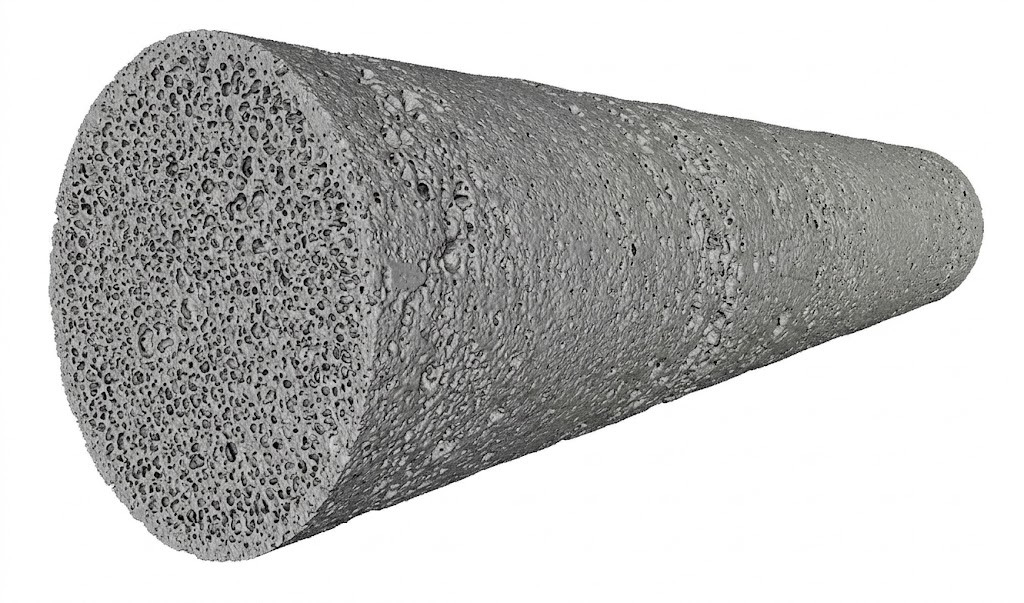

From Microstructure to Release Prediction
Input Microstructure
Upload imaging data (micro-CT, SEM, confocal) or use sGAN to generate synthetic microstructures from parameters.
Set Release Conditions
Define media composition, temperature, pH, and physiological parameters matching your target environment.
Run Simulation
Mechanistic algorithms compute release profiles accounting for diffusion, erosion, swelling, and pore evolution.
Analyze and Act
Compare formulation variants, correlate with experimental data, and export results for regulatory dossiers.
What ivisLab Delivers Across
Complex Product Development
From early feasibility through regulatory filing, ivisLab builds the mechanistic evidence your program needs.
Replace months of physical release testing with simulations that run in minutes. Screen formulation candidates virtually before committing material.
Move beyond empirical curve fitting. Understand exactly which microstructure features drive release behavior and why formulations succeed or fail.
Build CMC narratives grounded in first-principles physics with auditable, traceable simulation outputs that regulators can evaluate.
Predict how process changes affect microstructure and release. De-risk tech transfer with virtual stress-testing before manufacturing commitment.
Ready to Predict Release?
Start simulating drug release profiles for complex dosage forms today.
FAQs
Questions And
Answers
Browse our most commonly asked questions. If you don't find what you're looking for, reach out to our team directly.
dissoLab focuses on particle dissolution for oral solid dosage forms. ivisLab models drug release from complex dosage forms like long-acting injectables, implants, and depot formulations where release is driven by polymer erosion, diffusion through matrices, and pore network evolution.
ivisLab works with micro-CT, SEM, confocal microscopy, and other volumetric or cross-sectional imaging modalities. For early-stage work, ivisLab can generate synthetic microstructures using digiM's sGAN technology from parameter inputs alone.
Yes. ivisLab generates both in vitro and in vivo release predictions by accounting for physiological conditions, tissue interactions, and bio-relevant media parameters alongside the dosage form's microstructure.
Most simulations complete in minutes. Complex multi-phase systems with high-resolution microstructure data may take longer, but are still orders of magnitude faster than physical release testing.